In his teaching of Taijiquan (Tai Chi Chuan), the renowned master Yang Chengfu (1883–1936) emphasised ten essential principles. These principles are rooted in the Taiji classics (classical texts about Taijiquan) and were transmitted orally by Yang Chengfu who emphasised their importance in all aspects of Taijiquan.
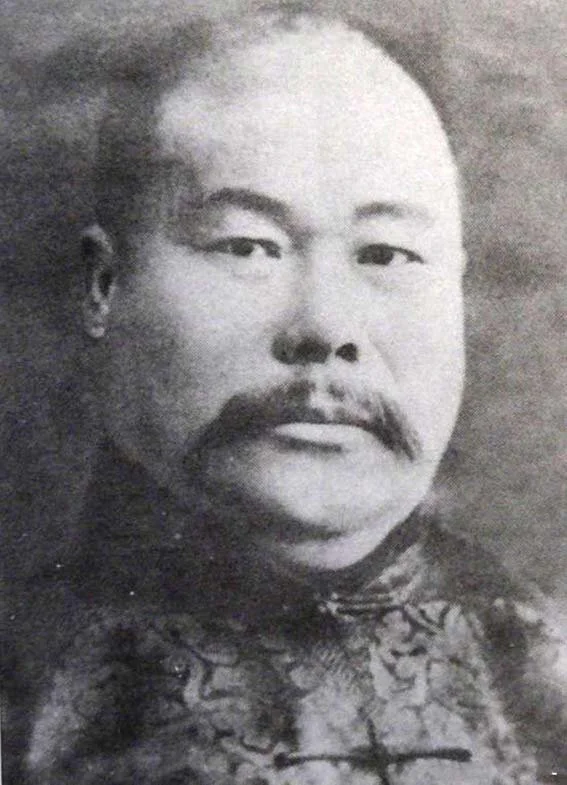
Master Yang Chengfu (1883 - 1936)
Grandson of Yang Lu Chan.
The essential points were documented by Yang Chengfu’s senior students, including Chen Wei Ming (1881–1958) who listed Yang Chengfu’s ten essential principles in his 1925 book ‘The Art of Taiji Boxing (Taiji Quan Shu)’, which is freely available online on the excellent Brennan Translation website.
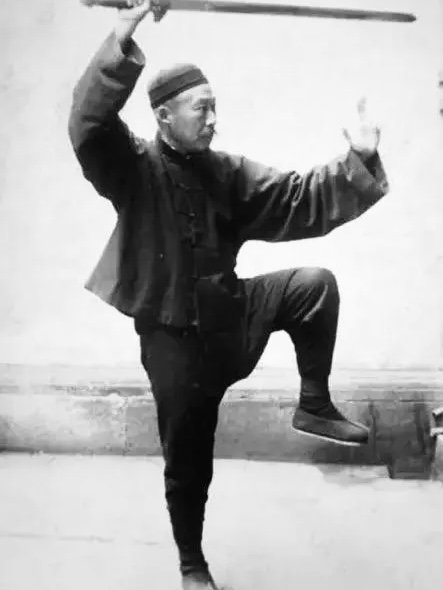
Chen Wei Ming (1881 - 1958)
Student of Yang Chengfu and one of the earliest authors writing about Yang style Taijiquan.
Yang Chengfu’s ten essential principles serve as a guide for the Taijiquan practitioner. Their meaning is layered and practitioners will interpret the meaning of each principle differently, depending on their level of experience and understanding.
For those just starting out in Taijiquan the principles have a postural or physical meaning and help beginners adopt appropriate physical posture and movement principles. For the more experienced, the posture and movement contexts remain, but are informed by the experience of practising and embodying them in form and pushing hands. The principles will also gradually begin to take on philosophical and energetic meanings as the practitioner’s skill level matures.
Yang Chengfu’s Ten Essential Principles are outlined below. As you will see, there are variations in how they are translated into English by different authors. The main translations outlined below are taken from Yang Chengfu’s 1934 book, The Essence and Applications of Taijiquan, translated into English by Louis Swain. I have also given alternative translations by a selection of other notable authors.
Principle 1: An intangible energy lifts up the crown of the head.
Also translated as:
Forcelessly press up your headtop. [2]
The head should be upright so the shen (spirit) can reach the headtop. [3]
Your head and spine must be straight. [4]
The energy at the top of the head should be light and sensitive. [5]
Commentary:
The first aspect of this principle relates to the position of the head and neck.
The head should sit comfortably on the neck and should not lean forward, backward or to the side. The head should feel as though it is suspended from above. This is achieved by gently pressing the crown of the head upwards and at the same time lightly tucking the chin so the muscles at the back of the neck lengthen, whilst remaining relaxed. This lengthening of the neck helps to maintain an internal dynamic tension through the spine.
In adjusting the position of the head and neck, it is important not to use force and for the neck muscles to remain relaxed.
The phrase ‘as if suspended from above’ is important. Imagine the head suspended from above by the hair, with the whole body hanging loosely down from this point of suspension. In this position the head and body can easily rotate left and right, but it is impossible for them to tilt forwards, backwards or to the side.
The second aspect of the principle relates to the shen (spirit), described as an intangible energy, rising to the head. Raising the spirit to the top of the head helps practitioners to remain mentally focussed and alert.
Principle 2: Contain your chest and pull up your back.
Also translated as:
Contain your chest and pluck up your back. [2]
Sink the chest and pull up the back. [3]
Sink the chest and raise the back. [5]
Commentary:
For some, the principle suggests sinking or collapsing in the chest inwards, whilst at the same time rounding the back.
For others, the reference to ‘containing the chest’ suggests the chest muscles should relax and sink downwards (rather than inwards) with the breath becoming focussed in the lower abdomen and the energy (Qi) sinking to the lower dantian. In our everyday lives, our breathing can be focussed in the chest, whilst in our Taiji, our breathing becomes concentrated into the lower abdomen and focussed on the lower dantian. Consequently, the expansion and contraction of our chest as a result of our breathing is reduced (contained).
It is interesting that translations refer to ‘pulling up’, ‘plucking up’ or ‘spreading’ the back, this suggests a relaxed lengthening or opening of the spine, rather than the rounding outwards of the upper back.
Principle 3: Loosen the waist and kua.
Also translated as:
Loosen your waist. [2]
Sung (relax) the waist. [3]
Relax the waist. [5]
Commentary:
In Taijiquan, the waist (yao) is the commander of the whole body.
In Taijiquan the waist works as a unit with the hips (kua). The waist (yao) constitutes the whole of the middle section of the body, including the lower back.
The connective tissue of the waist links the upper and lower body. Some teachers emphasise the importance of both relaxing and lengthening the waist (yao) to create a degree of dynamic tension to connect the upper and lower body.
The waist is the axis and acts to coordinate whole body movement. A loose, relaxed waist and kua create a stable stance, allowing the weight to shift easily from one leg to another and the body to rotate smoothly.
Principle 4: Distinguish empty and full.
Also translated as:
Distinguish between empty and full.[2]
Differentiate insubstantial and substantial.[3]
The substantial and insubstantial must be differentiated.[4]
Commentary
In Taijiquan, distinguishing between empty (Yang) and full (Yin) is of prime importance. Full is substantial and Yin. Empty is insubstantial and Yang.
In simple terms, distinguishing between empty and full refers to the distribution of weight between the legs. When the weight is fully on one leg, that leg is considered full or substantial, whilst the unweighted leg is empty or insubstantial. When the weight is fully differentiated, the empty leg is light and nibble and is able to step lightly and easily, or to kick. If you fail to fully differentiate between substantial and unsubstantial, your steps will be sluggish and your balance will be off.
In Taijiquan, your weight is continuously shifting from one leg to the other (from Yin to Yang or Yang to Yin) and there are no circumstances where your weight is equally distributed between both legs, a condition known as being double weighted.
Clearly distinguishing between empty and full are not just about the distribution of weight between your legs. All parts of the body have the potential to be substantial or insubstantial, Yin or Yang.
Moreover, when working with a partner in pushing hands, Taijiquan emphasises the importance of not meeting force with force. Rather, substantial force is met with insubstantial yielding and neutralising.
Principle 5: Sink the shoulders and drop the elbows.
Also translated as:
Sink your shoulders and drop your elbows. [2]
Sink the shoulders and elbows. [3]
Commentary
Sinking the shoulders means they are relaxed, the joints soft and open, with the shoulder blades hanging naturally downwards. When the shoulders sink, a strong connection is established between, allowing the Qi to move smoothly from the torso into the arms.
The elbows should hang loosely from the shoulders but not so loosely that they are collapsed.
A sense of the shoulders sinking and the elbows dropping must be maintained even when the arms are raised above the head. It is a common error to lift up the shoulder by tensing the trapezius muscles when the arms are raised above the head.
If your shoulders cannot loosen and hang, they will end up lifting, breaking the connection between your body and your arms.
Principle 6: Use mind intent (Yi), not strength (Li).
Also translated as:
Use intention, not exertion. [2]
Use mind and not force. [3]
Use the mind and not strength. [5]
Commentary
When you practice your Taijiquan, it is important to be completely relaxed in body and mind. This means removing every ounce of unnecessary strength from your movements, without allowing your structure to collapse.
Cheng Man Ching, one of Yang Chengfu’s pre-eminent students, said that his teacher would repeat the words ‘relax, relax, relax completely’ many times each day.
The relaxation that we seek in Taijiquan is called Sung. The concept of Sung incorporates relaxation, and the releasing of tension that does not need to be held within the body and mind. We are striving not for the total absence of strength or tension from the muscles and sinews, but the elimination of that which is unnecessary.
In Taijiquan, it is said that the mind (Yi) leads the Qi and the Qi motivates physical movement. So, wherever the mind goes, the Qi will follow and generate physical movement.
When we use strength, the associated tension or stiffness blocks the flow of Qi throughout the body. When the body is relaxed, the Qi is unimpeded and flows smoothly and continuously, as does the physical movement which follows.
Principle 7: Upper and lower follow one another.
Also translated as:
Your upper body and lower coordinate with each other. [2]
Upper and lower mutually follow. [3]
Unity of the upper and lower body. [5]
Commentary
There must be a unity between the upper and lower body.
The power of Taijuquan is often described as being rooted in the feet, released through the legs, controlled by the waist, and expressed in the fingers. Even the gaze is described as following the movement.
As you move in Taijiquan you are constantly transferring your weight from one leg to another. In this process you are repeatedly storing energy in one leg and then releasing it. This energy travels up the legs, through the waist and into the arms before being ‘expressed’ in the hands.
This description of the transfer of power from the lower to the upper body, through the waist is of a sequential chain of connected movements through which the power of the whole body is released. The movements of Taijiquan are whole body movements and the arms never move independently.
Principle 8: Inner and outer are united.
Also translated as:
Inside and out join with one another. [2]
Inside and outside coordinate. [3]
he unity of internal and external. [5]
Commentary
In Taijiquan, there is a continual interplay between Yin and Yang, full and empty, substantial and insubstantial, closings and openings, expansion and contraction. This continuous flow from one to the other happens both outside and inside the body, such that inner and outer are united.
Expansion is not only a matter of hands and feet. The intention also expands. Contraction is not only a matter of hands and feet. The intention also contracts.
Principle 9: Proceed evenly from posture to posture.
Also translated as:
The movements are linked together without interruption. [2]
It is mutually joined and unbroken. [3]
Continuity without interruption. [5]
Commentary
When you practice your Taijiquan form, the movements most flow continuously, with each movement seamlessly integrating with the next, without any pause of interruption of the movements.
As Taijiquan uses mind intent rather than brute force, from beginning to end the movements are smooth and continuous, like a long river flowing ceaselessly on and on to the wide ocean.
Another description of the character of the Taijiquan movements is that of drawing out a silk thread from a cocoon. This must be done gently and continuously, as any sudden movement or rash strength will break the silk thread, as they will bream the continuity the sequence.
Principle 10: Seek stillness in movement.
Also translated as:
Within movement, seek stillness. [2]
Commentary
Even when you are externally moving in Taijiquan, there is internal stillness. The mind is calm and the breathing slow and deep. In this state, the Qi naturally sinks to the lower dantian.
Additional Notes
It is notable how many of Yang Chengfu’s ten essential principles are explicitly set out in terms of interactions of Yin and Yang, for example, empty (insubstantial) and full (substantial), upper and lower, inner and outer, movement and stillness.
Most of Yang Chengfu’s notable students who went on to publish books on Taijiquan refer to the essential principles. However, the number of essential principles seems to vary from author to author. In 1925 Chen Wei Ming was the first to publish Yang Chengfu’s principles and he listed ten, a number that seems to have stuck.
In his own 1935 book, Yang Chengfu offers only a short paragraph on the important points of Taijiquan, preferring instead to focus on references to the Tai Chi Classics. Interestingly, Yang Chengfu lists thirteen important points. The extra three being:
The Qi sinks to the dantian.
Movement and stillness are united. (Also listed is Seek stillness in movement).
Intention and Qi interact. (Also listed is use mind intent, not strength).
A Personal Note
I’ve done my best to present Yang Chengfu’s ten essential principles as comprehensively and clearly as possible, primarily for my own students. This article reflects my own knowledge and understanding of Taijiquan, which continues to develop and evolve. If you think anything is incorrect or if you’d like to add something else, please don’t hesitate to get in touch.
References
Yang Chengfu (1934). The Essence and Applications of Taijiquan. Translated by Louis Swaim. North Atlantic Books. Published 2005.
Chen Weiming (1925) The Art of Taiji Boxing (Taiji Quan Shu). Translated by Brennan Translation. Available online at: https://brennantranslation.wordpress.com/2012/03/21/the-art-of-taiji-boxing-taiji-quan-shu/.
Lo Benjamin, Inn Martin, Amacker Robert, Foe Susan (1979) The Essence of Tai Chi Ch’uan: The Literary Tradition. North Atlantic Books.
Cheng Man-Ch’ing and Robert Smith (1967). T’ai Chi: The Supreme Ultimate Exercise for Health, Sport and Self-Defense. Charles E. Tuttle Co. Inc.
Tai-Chi Touchstones. Yang Family Secret Transmissions (1983). Compiled and Translated by Douglas Wile. Sweet Chi Press.
Recommendations for Further Research
If you’d like to learn more about Yang Chengfu’s ten essential principles, I would recommend the excellent video by Adam Mizner of Heaven Man Earth Tai Chi. Adam’s website ‘Heaven Man Earth Internal Arts International’ is an excellent online resource for those interested in developing their Taijiquan.
There is a sound article on Yang Chengfu’s ten essential principles on the official Yang Family Tai Chi website. This sticks fairly closely to Chen Wei Ming’s 1925 text.